Showing posts with label forex trend. Show all posts

Sunday, 15 November 2020

How To Spot Reversals In Forex

 A Forex Reversal is the bouncing of price to a different direction; providing opportunities for traders to enter the markets...


Reversals are areas on a chart where the price of the market bounces from the direction it has been

moving in and then moves in the opposite direction. 

Traders look for areas where this might happen, before it happens, to then profit from the move in the opposite direction.


Here Is A Youtube Video That Takes You Through 3 Awesome Methods To Easily Spot Reversals…


This is a deceptively simple concept because it can be very hard to correctly identify where a

Forex Reversal will take place.


So I have some methods for you that will help you To Spot Reversals In Forex...


Support and resistance Levels

Support and resistance levels are levels on your chart where price has bounced off or reversed several times before.


As it has bounced off these levels in the past, if price now reaches one of these levels again

then price may well bounce once more and traders can capitalise on the bounce


When I draw these levels I differentiate between monthly strong levels (red Line), weekly

medium levels (Blue Line) and daily levels (black line).


If price has reached a monthly level it is more likely to bounce off that level than if it has

reached a weekly level and, conversely, if price has reached a weekly level it is more likely

to bounce off that level than if it has reached a daily level


This is important because it helps you decide if the point at which price is at is likely to be

a place where the price will reverse.


If price is at a monthly level for example it is more likely that the price will bounce off this

level than if price has reached a daily level.


Trendlines


Trendlines are a sloping form of support and resistance levels and work in conjunction with

horizontal support and resistance levels.


Trends are either uptrends or downtrends. In order for an uptrend to be valid it must have

created 2 higher highs and 2 higher lows.


In order for a downtrend to be valid; it must have created 2 lower lows and 2 lower highs.
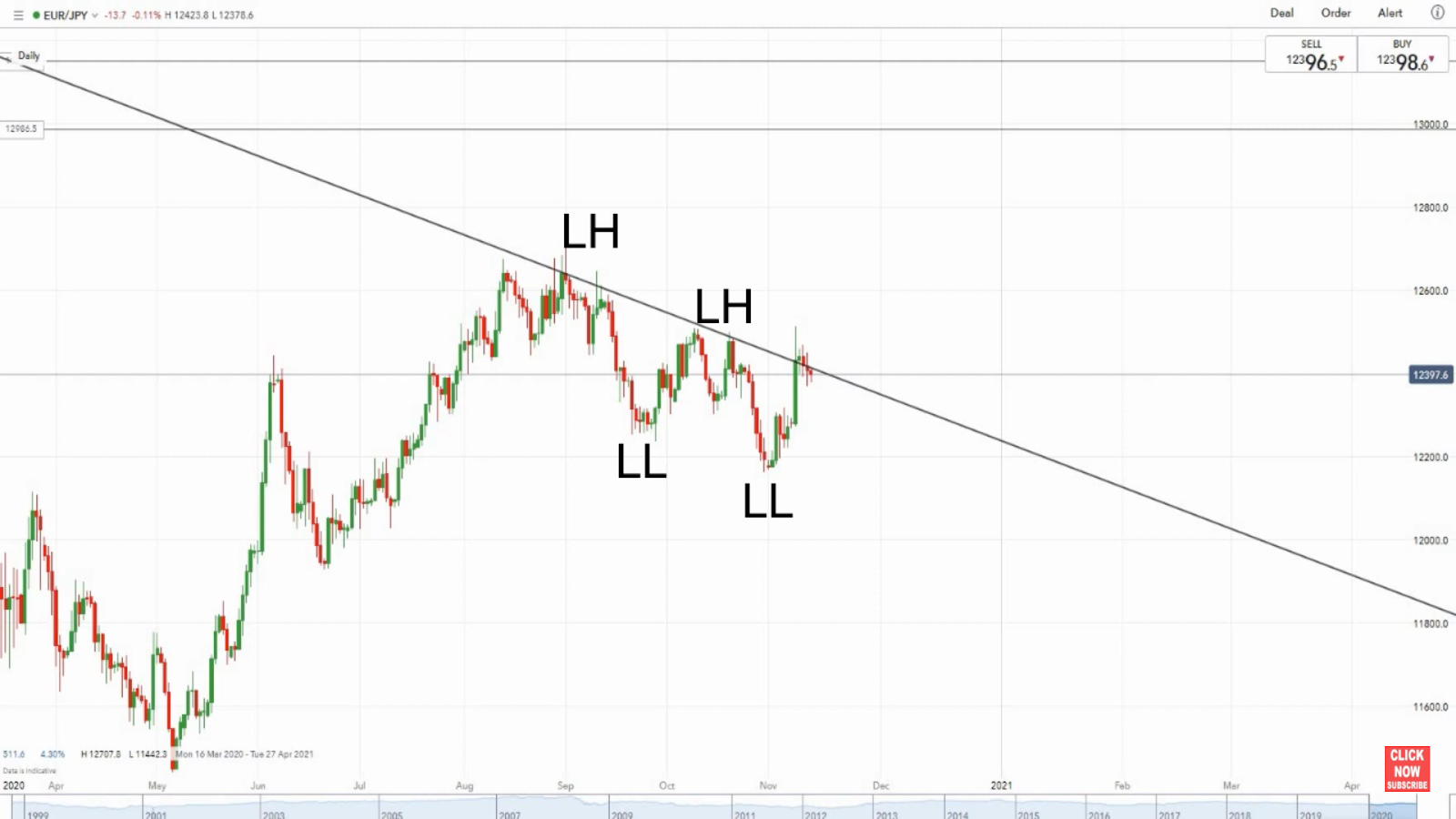


A trendline is then drawn on. 


In an uptrend; the trendline is drawn below the trend and must join the 2 higher lows. Traders

will then look for the price of the market to move back or retrace towards the trendline. Once

price reaches this point it is a first indication that price may bounce off this level and traders

will look to place a long trade that will profit from the potential following bullish price action.


In a downtrend; the trendline is drawn above the trend and must join the 2 lower highs. Traders

will then look for price to rise back to the trendline, again as indication that price may bounce

from this level and they can place a short trade which profits from potential following bearish price

action.


Fibonacci Levels


The Fibonacci indicator is used in a trending market where it has, by far, the greatest effect.


There are 5 main levels which are the 23.6% level, 38.2% level, 50% level, 61.8% level and

the 76.4% level.


In an uptrend, the Fibonacci indicator would be drawn from the most recent higher low to the

most recent higher high. You would then drag across your screen so that the levels cover your

chart.
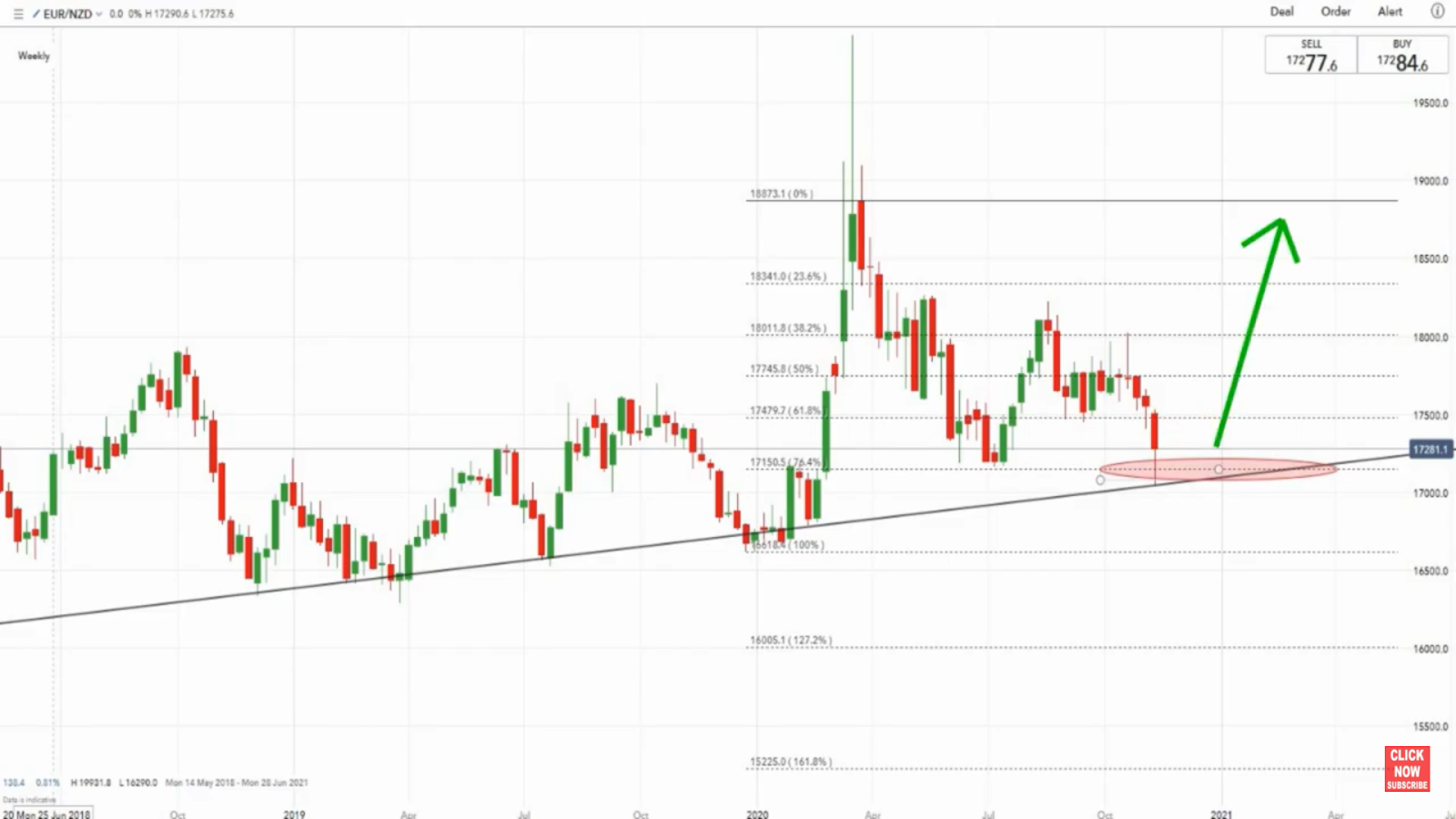


You can see above that the levels appear when you do this. From this point traders would be

looking for price to retrace back to one of these levels. When price comes back and looks like

it is stalling at one of these levels, this could be an opportunity to enter a long trade and profit

from the potential following bullish price action.


In a downtrend, the Fibonacci indicator is drawn from the most recent lower low to the most

recent lower high. Once again, drag the indicator across your screen so that the levels cover

your chart.
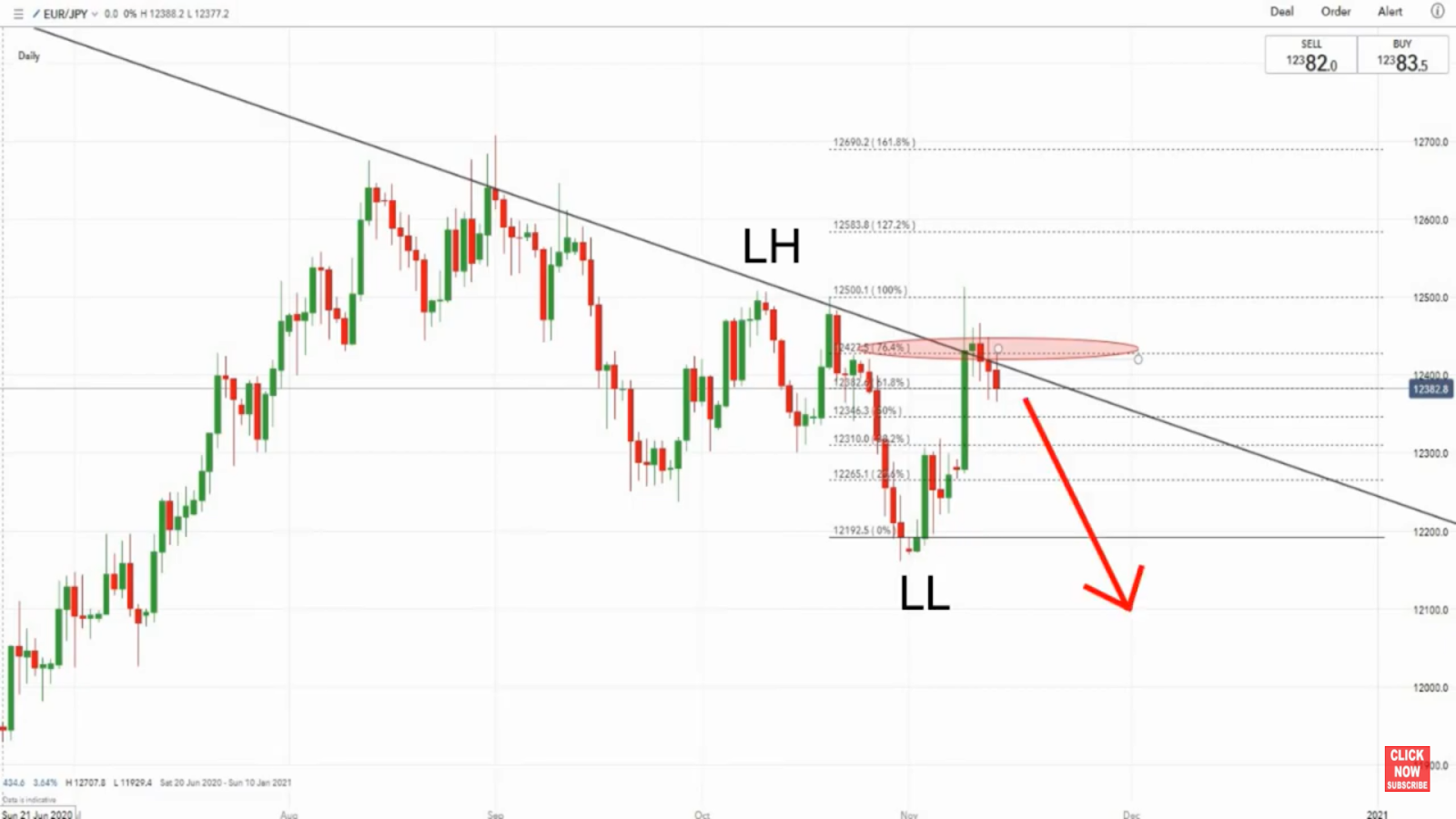


From this point traders will look for price to retrace back up and stall at one of these levels. This

could be an opportunity to enter a short trade to profit from the potential following bearish price action. 


Combine The Indicators Together


The great thing about this and the other 2 indicators is that they can be combined together. If, for

example, price has retraced to a support and resistance level and is stalling, it could be a good place

to enter a trade. But, if you combine the indicators and also find that price is on a trendline and a

Fibonacci level then this increases greatly the likelihood that price may reverse from the point you

are looking at.
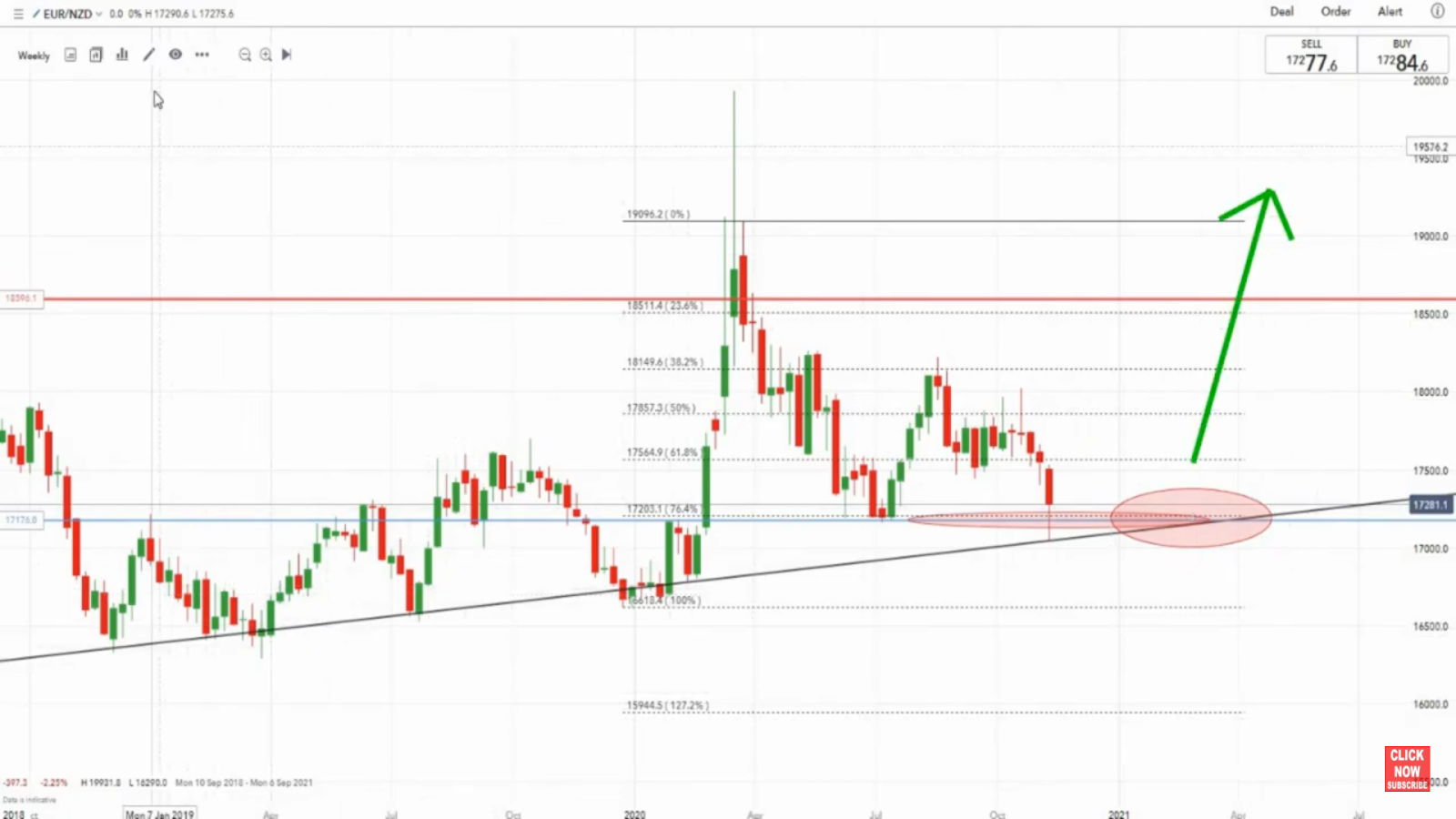


As you can see above; not only has the market retraced from a higher high to a weekly support

level (coloured blue) but this also coincides with the ascending trendline.


If we also add on the fibonacci indicator we find that price is also hovering around that 76.4% level.


If we get further confirmation that price is about to reverse then this could be a good place to enter

a trade.


Ok guys, I hope you enjoyed reading this blog post! Make sure you like it, comment to ask me any

questions you have and follow me to be notified of my updates - I am going to be posting regularly

so follow me to make sure you don't miss anything!


Until next time...

Sunday, 12 May 2019

Which Moving Averages To Use As Best Forex Support and Resistance Indicators


Moving averages can be a fantastic tool to use as dynamic support and resistance…


The advantage they have over static support and resistance levels like trendlines, is that they use an average of recent price levels to form their smooth lines, arguably making them more reactive and, therefore, a better indication of where the price of the market may respect.

Here Is a YouTube Video That Will Take You Step By Step Through How To Analyse A Trend Entry Using Moving Averages As Your Support And Resistance Indicators

 Best Forex Support And ResistanceIndicator To Use To Trade Support And resistance


So, the big question is which ones should you use!?

With so many blogs and tutorials out there suggesting their favourite methods it can be tough to know which is the best one. I want to take a slightly different route and help you to decide using a test strategy on your charts.

Ok, first off, moving averages are most useful in trending markets – that is uptrends or downtrends. Now, they are not completely useless in ranging markets, but as support and resistance levels, trending markets are certainly preferable.

So, you have your market that is in a trend – as you can see from the image below – which is a 4 hourly chart of the NZD/CAD.


We can see that the downtrend has already given use 2 lower highs and we want to try and use our moving averages to enter on the third lower high. Now, what we are going to do is go through the various moving averages to see which ones give us the best indication of resistance.

So the most commonly used ones are:
10 day
20 day
50 day
200 day

What we are looking for is 2 moving averages that, once applied to the chart, the market bounces in the middle of.

So, personally I always start off with the 20 day and 50 day as you can see below.


Now, here we can see that these two are simply too low for this time frame on this pair.

So next I will get rid of the 20 day and add the next moving average, which is the 200 day. This is the step you should follow on any market you are looking at.


So, here we go! Now we can see that our two higher lows have bounced right in the middle of our 50 and 20 day moving averages and so these are the correct ones to use for this situation.

Right, so we are now going to be looking for price to retrace in-between the 50 and 200 day moving averages before we place our trades.

One final point is that you should always have at least 2 points of reference on your charts, no matter which indicator or technical analysis method you are using – I have found that horizontal support and resistance levels work really well with moving average support/resistance.

Here is an example of what this would look like once you have added it to your chart:


So, in actual fact you will not only be looking for the market to retrace in-between your moving averages, but you will also be looking for it to meet one of the horizontal support/resistance levels before placing your trade!

I hope you found this article useful, don’t forget to follow me to be notified of the articles that I am posting and hit the like button to let me know what you think.

Also, feel free to comment below with any questions you might have regarding moving averages as support and resistance indicators!

Tuesday, 7 May 2019

How To Use Moving Averages To Trade a Forex Trend


If you are just getting started in the forex market then the first strategy you should try should be trading with the trend.

More often than not indicators can confuse forex noobies. However, when used in the right way they can be a real asset to a trader’s trend following toolbox.

Trend indicators are used for 2 main purposes. The first is to help ascertain when a market direction is changing so as to enable the trader to enter the new trend as quickly as possible. The second reason might be further through a trend to assess whether now is the right time to enter.

A cautionary note here though. A maximum of 3 indicators should be used to aid your trading. Due to the fact that indicators derive their information from differing mathematical calculations, if you have too many on your charts they will end up giving you conflicting signals – actually a worse position to be in than if you never used them at all.


Here is also a YouTube video which gives you the 5 best trend forex indicators and shows you how they can best be used!

The Top 5 Indicators That I Have Found To Trade With The Trend


Indicator #1 – Moving Averages

Simple moving averages can be an excellent aid to tell the trader when a market may be about to change direction and also to tell whether now is a good time to enter in the current trend.

The 2 most commonly used are the 20 and 50 day moving average. If the 50 day is below the 20 day then the market is moving up and if the 50 day is above the 20 day then the market is moving down.
A cross of these 2 on a chart is also a very important signal. The 50 day moving above the 20 day may be a signal that the market is about to move down and a cross with the 50 day moving below the 20 day is a signal that the market is about to move up.


These crosses can represent excellent opportunities for a trader to enter the market to make the most of the upcoming change in a trend. However, the decision to enter should not solely be based on this indicator and other parts of your strategy should confirm what the moving averages are showing.

If the market you are looking at is in the midst of a trend then the 50 and 20 moving averages can act as dynamic support and resistance levels. if we take the example of the downtrend below we can see that the market consistently moved backup to the 20 day moving average throughout the downtrend before heading back down:

In this instance you could used the 20 day moving average as part of your strategy to tell when was a good time to enter the downtrend and profit from a continued move down.

Be aware though, that this does not always apply. Confirmation of this can only be taken when the market has moved back to the moving average and bounced off it at least twice - whether that be an uptrend or a downtrend. This is also why moving averages, and all other indicators for that matter, should form a part of your overall strategy and you should not solely rely on them!

I hope you enjoyed this article - please comment to let me know if you use this indicator and how successfully. Also hit the like button and follow me to let me know what you think and share so I can continue to write.

Thank you in advance....see you next time

Monday, 6 May 2019

4 Steps To Trading With The Trend


Trading with the trend is widely acclaimed as the best strategy for the noobie Forex Trader. There is a lot to be said for the old adage “The Trend Is Your Friend” and many worthy beginner traders come unstuck because they assume that the best way to enter the markets is to look to buy at the bottom of a trend or sell at the top.

Whilst this can be a prudent strategy, it is not for the beginner and takes a lot of practice and experience to be able to pull off trend reversals effectively.

Fear not, however, as trading with the trend can yield excellent profits and, as you practice with this method, you are naturally building up your skill set and experience. This can then later be used to great effectivity for more complex and more profitable strategies.

So, without further ado, let’s get started…


Step 1 – Identify The Trend

Here is a YouTube video that will walk you three methods to identify a trend:

3 Ultimate Trend Identifying Tips!


This is by far the most important step as, if you get this bit wrong, it will render the rest of the steps irrelevant.

There are 3 different methods that I recommend to correctly identify the trend and you can see a YouTube that I have created which focuses on this here:

My favourite method is to use Highs and Lows – this method consists of analysing the chart and plotting high and low points to confirm or invalidate the trend.

In an uptrend you would plot a series of subsequent high points. Underneath this, on the same chart, you would plot a series of subsequent higher low points.

As soon as you get a lower high point or a lower low point then the trend is invalidated and may be about to change direction.


Step 2 – Find An Entry Point
So, once you have correctly identified the trend, the next step is to work out where you are going to enter your trade.

Another mistake that a lot of beginners make is trying to trade both directions on a trend – this should not be attempted and is likely to cost you far more money than it makes you!

The best method for finding an entry point in an uptrend is to look for retracements back to the higher low areas. You have to make sure that it is at least the second higher low as only then is the uptrend confirmed.

You can then enter and potentially make money from the continuation of the uptrend. Don’t forget you should look for a candlestick signal or indicators/s signals as added confirmation that the trend will continue.

In a downtrend it is exactly the same process, except you are looking to enter at a retracement back to lower highs.


Step 3 – Use a Stop Loss
Always make sure you use a stop loss when trading! This is absolutely crucial! Spread Betting is leveraged and using a stop loss will deleverage your trades, meaning that you are far less likely to lose more than you originally invested.

A good rule of thumb for setting a stop loss is to put it below the lowest point of the higher low entry level on the uptrend and above the lower high on a downtrend. The amount at which you set the stop loss away from the higher low/lower high is dependent on the time-frame you are trading on.

For example, I mostly trade on the daily and 4 hourly time-frames and so I usually use a 100-150 pip stop loss.

Step 4 – Always Have a Target
This is far better worked out before you take the trade because you are far more likely to be thinking logically and clearly when you are in the initial planning stages of the trade than when it is in motion.

When in an uptrend I target my take profit 100-200 pips above the previous high and in a downtrend 100-200 pips below the previous low. This also tends to set my risk to reward ratio up to be at least 1.5-1 and often 2-1.
Make sure you don’t move your take profit target – it is important to make sure you are taking profits off the table and not get swept up in greed – this will lead to winning positions turning into losses.


Ok, that’s all for this blog post guys. I hope you enjoyed reading the article.

Don’t forget to check out my YouTube video on 3 methods to correctly identify a trend!


Until next time…